Category: seed saving

  • Research – Evidencing the Benefits of Growing your Own

    Research – Evidencing the Benefits of Growing your Own

    In 2018, University of Liverpool academics (and Liverpool Food Growers Network board members) Professor Charlotte Hardman and Dr Beth Mead embarked on a programme of research in collaboration with Lancaster and Cranfield Universities to uncover the transformative potential of urban food growing for health, sustainability and food-system resilience.

    The Rurban Revolution project is the result of this collaboration. “Rurbanisation” refers to ruralising urban areas by dramatically upscaling food-growing and greening. The project addresses key priorities around (1) improving availability, access and consumption of fruit and vegetables, (2) boosting food production, quality and resilience of the UK food system, and (3) ecosystem service delivery, both inside and outside cities.

    The project has generated important new evidence. Here are the 10 top findings.

    1. Urban green spaces in Great Britain, at their upper limit, have the capacity to support production that is 8× greater than current domestic production of fruit and vegetables. This amounts to 38% of current domestic production and imports combined, or more than 400% if imports of exotic fruits and vegetables less suited to GB growing conditions are excluded.

    2. All 26 towns/cities included in our analysis had enough green space to substantially help meet the fruit and vegetable dietary needs (5-a-day) of their local urban populations, as specified by the World Health Organisation. For example, in Liverpool, by harnessing all of the city’s urban green spaces we would be able to produce roughly of 113.4 metric tonnes of fresh fruit and vegetables per year. Taking into account the population of Liverpool, this equates to 192.2kg of fresh fruit and vegetables per person/ year. That’s more than the World Health Organisation’s recommended intake of 146kg per person/year (i.e. 5 a day)!

    3. Most urban green spaces in Great Britain fall within a small number of categories, with private residential gardens and amenity spaces making up the majority of space. Therefore growing in households and workplaces is an important arena to consider for expanding urban food growing activity.

    Academic article : Walsh, L. E., B. R. Mead, C. A. Hardman, D. Evans, L. Liu, N. Falagán, S. Kourmpetli and J. A. Davies (2021). “Potential of urban green spaces for supporting horticulturalproduction: a national scale analysis.”; Environmental Research Letters, 17: 014052

    Blog: https://www.lancaster.ac.uk/lec/about-us/news/study-shows-urban-britains-potential-as-a-grow-your-own-nation

    4. Urban agriculture can have similar or greater yields compared to conventional agriculture. Urban yields for crops like cucumbers, tubers and lettuces are 2-4 times higher than conventional farming. 

    Academic article : Payen, F., Evans, D., C. A. Hardman, L. Liu, N. Falagán, S. Kourmpetli, R. Marshall, B. R. Mead, and J. A. Davies, “How much food can we grow in urban areas? Food production and crop yields of urban agriculture: A meta-analysis”; Earth’s Future, 2022.

    https://doi.org/10.1029/2022EF002748

    Blog: https://news.agu.org/press-release/urban-crops-can-have-higher-yields-than-conventional-farming/

    5. Urban agriculture delivers a wide range of ecosystem services. Urban greenspaces and urban agriculture are similar in their ability to deliver a wide range of ecosystem services. Community Gardens, allotments, and parks were found to be most conducive for diverse service provision (e.g. creating pollination and biodiversity win-wins).

    Academic article : Evans, D., B. R. Mead, C. A. Hardman, L. Liu, N. Falagán, S. Kourmpetli and J. A. Davies (2022). “Ecosystem service delivery by urban agriculture and green infrastructure – a systematic review”; Ecosystem Services, 54: 101405

    News article: https://www.theguardian.com/environment/2022/jun/04/londons-food-growing-schemes-offer-harvest-of-fruit-veg-and-friendship

    6. Urban agriculture can improve food security by increasing access to and availability of healthy, fresh food. It can also have wider benefits for individuals such as supporting skill development, social connections and well-being.

    Academic article : Mead BR, Duncombe T, Gillespie R, Pugh N, Hardman CA. Does urban agriculture contribute to food security, and how might this be achieved? Proc Nutr Soc. 2024

    Sep;83(3):195-203. doi: 10.1017/S0029665124002209.

    7. People who are involved with urban food growing tend to make healthier and more ethical food choices, as shown by our survey of over 500 people.

    8. Opinions of urban food growing are positive. Between 87% and 94% of people in our survey endorsed urban agriculture as beneficial for themselves, their communities and the environment. Improved access to growing spaces, time, access to information/guidance, and awareness of urban growing were most frequently identified as factors that would make it easier for people to engage in urban growing.

    Academic article : Mead, B. R., P. Christiansen, J. A. Davies, N. Falagán, S. Kourmpetli, L. Liu, L. Walsh and C. A. Hardman (2021a). “Is urban growing of fruit and vegetables associated with better diet quality and what mediates this relationship? Evidence from a cross-sectional survey.” Appetite 163: 105218.

    Blog: https://wp.lancs.ac.uk/rurbanrevolution/2021/04/30/urban-agriculture-healthy-diet-and-understanding-how-they-might-be-related-new-rurban-revolution-research-now-published/

    9. Food growers were less worried about their food supplies and reported higher levels of wellbeing during the UK COVID-19 national lockdown (March-April 2020), compared to people who were not involved with food growing

    Academic article : Mead, B. R., J. A. Davies, N. Falagán, S. Kourmpetli, L. Liu and C. A. Hardman (2021b). “Growing your own in times of crisis: the role of home food growing in perceived food insecurity and well-being during the early COVID-19 lockdown.”; Emerald Open Research 3: 7.

    10. Community-scale food providers played a vital role in supporting a resilient supply of nutritious food during the COVID-19 pandemic. Greater investment is recommended to allow these providers to further contribute to a more resilient UK food system.

    Policy brief : Resilience of the UK Food System in a Global Context (GFS-FSR) Programme (2022).

    “Making community-scale food systems more resilient: reorienting consumption practices by supporting community scale supply chain models”. Global Food Security – Policy and Practice Brief.
  • Green Social Prescribing

    Green Social Prescribing

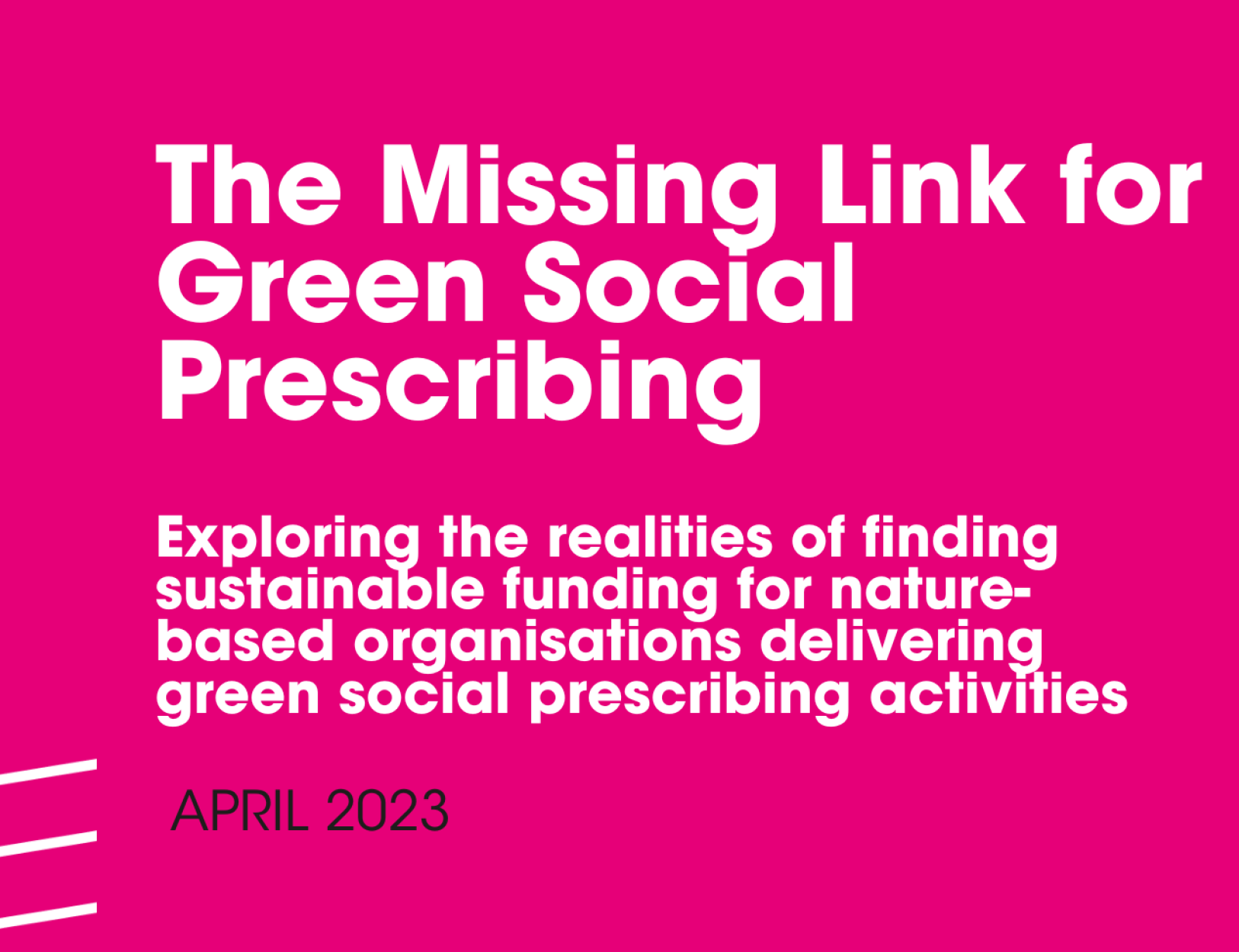
    Want to understand more about the benefits, challenges and future of social prescribing in green spaces? Read the report here.

    Credit: Groundwork Cheshire, Lancashire & Merseyside, Natural England and Capacity

  • Online Communication

    Online Communication

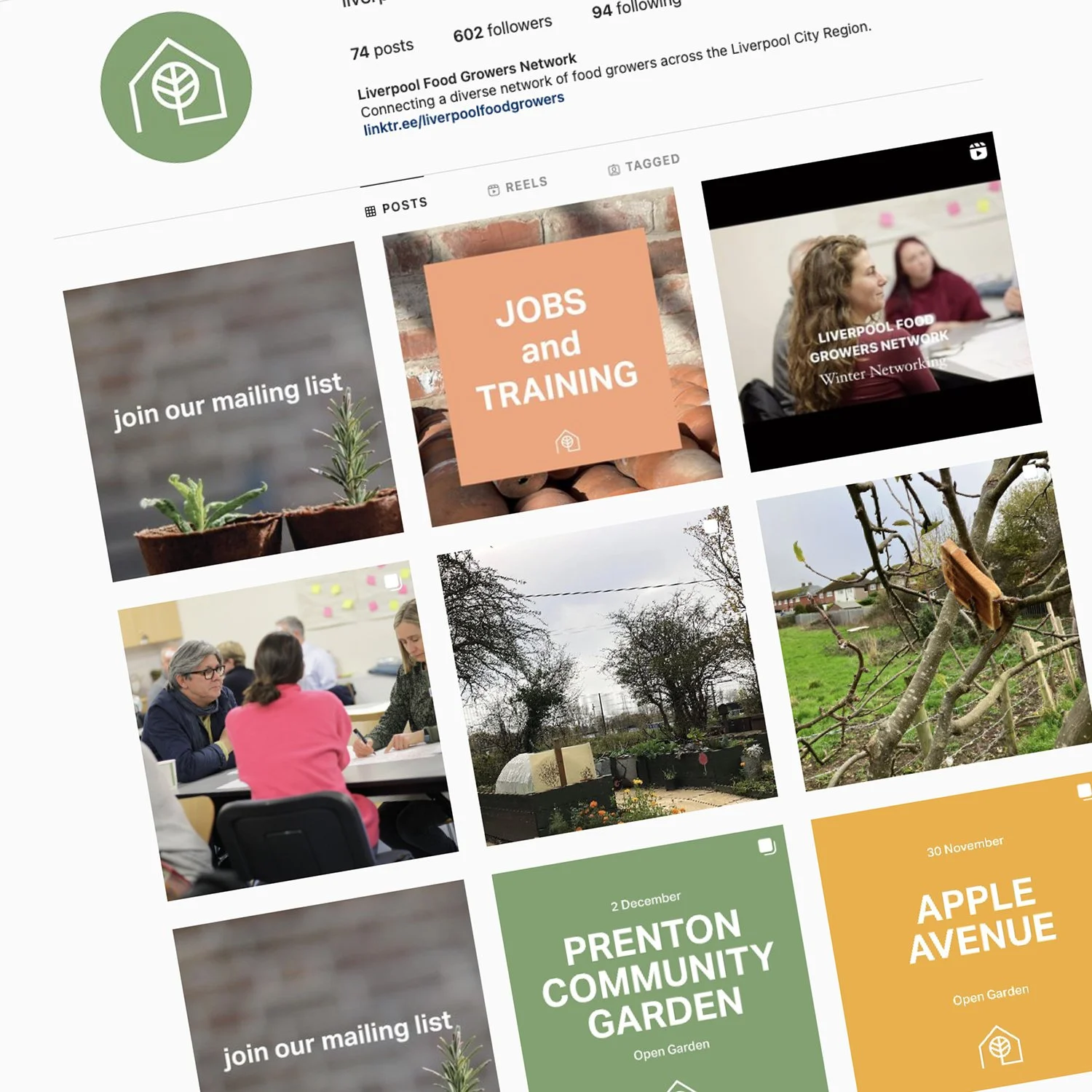
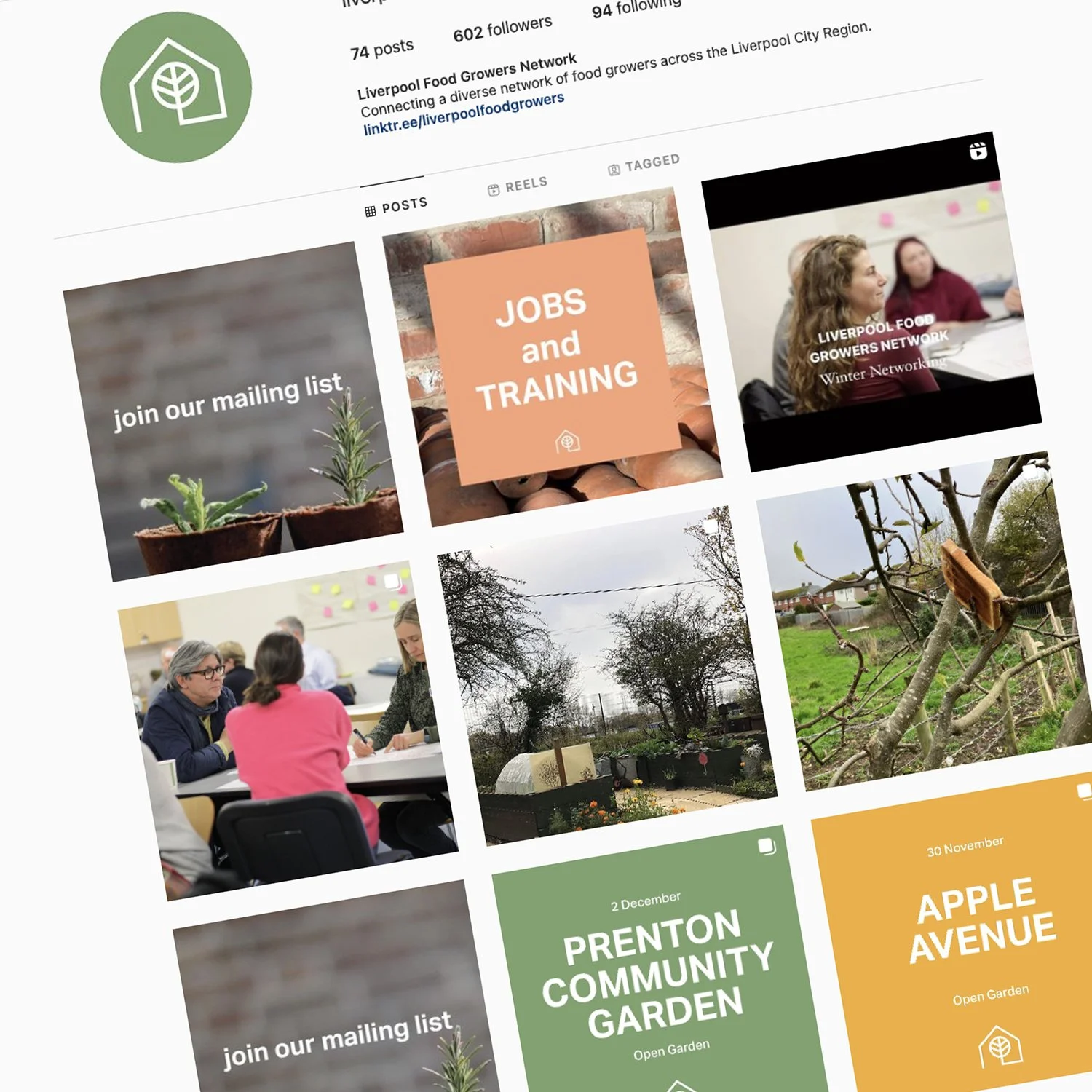
    Why do we need to share information online about our growing projects? How can we make the most of social media? What can we do to make it simple and effective? Kirsty Thomas, designer and gardener, shares some tips on making your online communication impactful, fun, meaningful and painless.

    Social media and online communication can seem daunting and might feel like time wasted when we could be out in the garden, but as community food growers we are part of a world-wide movement and how we tell our story can impact lives, change opinions and inspire others.

    And we’re lucky, because vegetables are really photogenic and there is always something beautiful to share in the garden.

    Online communication comes in lots of different guises… Facebook, Instagram, Twitter and TikTok are all to be found on smartphones so can be accessible and simple to use. Websites and mailing lists need a little more time and effort but work really well to target your local community, share bigger projects and reach people directly.

    The good people at Incredible Edible said it well, “The best social media isn’t just about posting pictures of what you have grown but about creating a two-way conversation with people about why you did it and what it means to you. Like all good conversation it is about listening as well as speaking – it is a two way street.”

    1. Choose which social media platforms you want to use. Look around them and see which is a good fit for your project. Facebook, Instagram and Twitter can all be connected to each other so it’s really easy to post to all three at the press of a button, tripling your engagement.

    2. Once you’ve picked your platforms make sure that your profile is accurate and informative. If you have a website or email address share this in your profile so people have other methods of reaching you. Likewise make sure people know exactly where your growing project is located.

    3. Decide who will be responsible for your social media and online communication. Most platforms allow more than one administrator which means you can share the workload but it’s a good idea to set some ground rules so that your “feeds” look consistent, professional and engaging.

    4. Create amazing content! Nobody likes pixelated photos, spelling mistakes or bad grammar and people engage best with positive, inspiring posts. If you have a smart phone you can create beautiful photos and films to share (we have a guide to that here) without bringing in the pros. And with a bit of practice you can use in-app editing to create simple Reels (films) with music and text to really wow your followers!

    5. Getting people to follow you on social media can seem like a big mystery. The best way to find new followers is to find people you like on each platform and follow them – if they share your values they might follow you back and spread the word. Facebook groups are also a great way to find similar people online and wonderful places to share your events and news. On Instagram, hashtags are a good way to engage new followers. For example #communityorchard will bring up over a thousand posts all from likeminded growers.

    6. Why you are posting? Do you want to share some news, ask a question, promote an event? Try to post things that people can share, chat about, respond to. A photo of a giant leek is always fun but asking your audience to share their biggest vegetable stories will really get people talking!

    7. Social media etiquette… nobody likes a troll. Use your social media to spread positivity, action and inspiration.

    8. Websites are a step up from social media and most community growing projects manage without. If you are considering building a website, employing a professional web designer is money well spent. A bad website can easily send people running for the hills!

    9. Digital newsletters are a great way to update your audience once things are really established. You must adhere to GDPR legislation when collecting and storing peoples contact details so its worth doing a bit of research into this before setting up.

    10. Don’t get overwhelmed… using online marketing can become all consuming. Switch of notifications, share the task with others and make sure you are still spending lots of time growing!

  • Soil – Regenerative Practices

    Soil – Regenerative Practices

    Good soil health isn’t just about getting healthy crops, it’s about tackling climate change, capturing carbon, building life and saving time. Kirsty Thomas, community gardener at The Florrie discusses how to build regenerative practices into your own growing project.

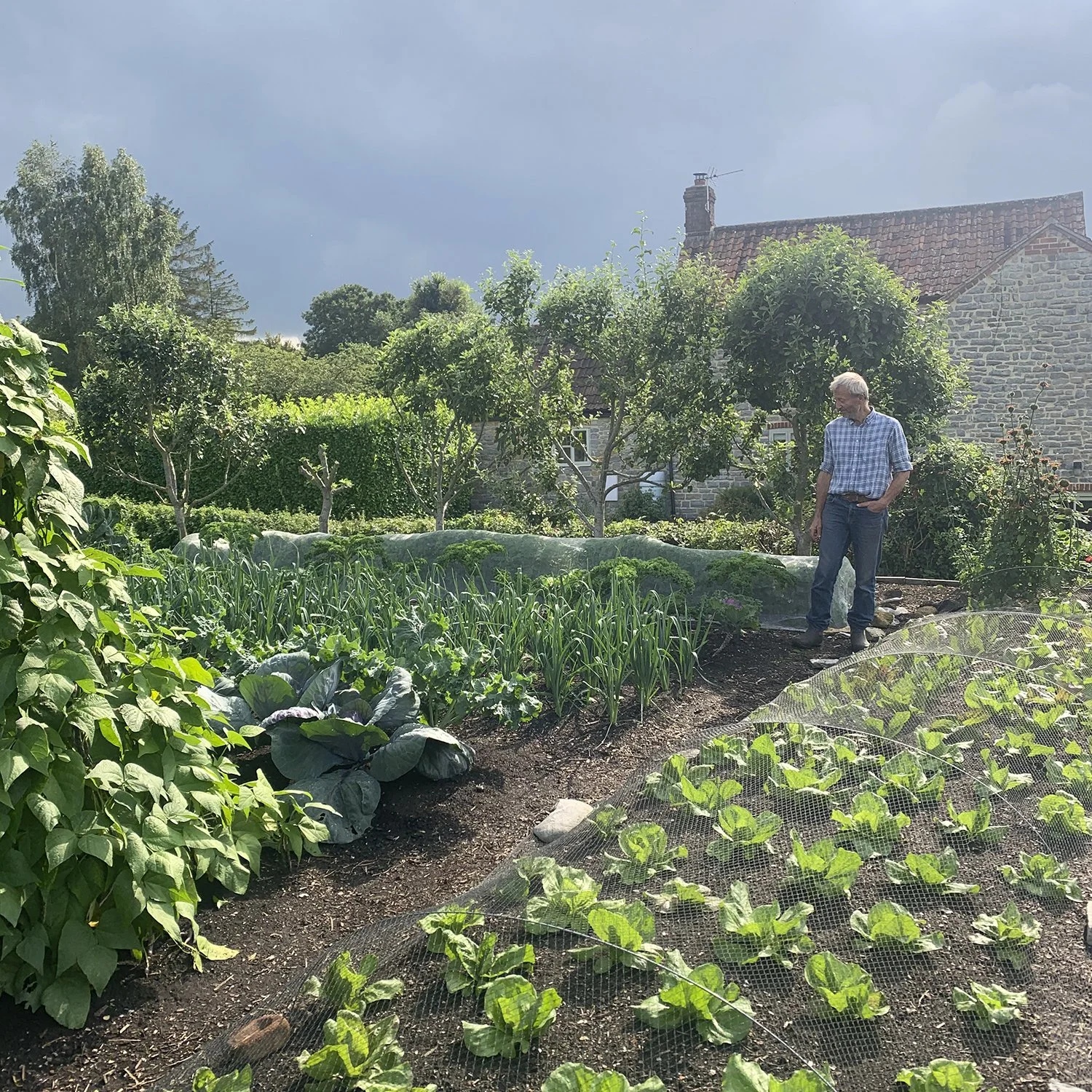
    Like most gardeners the time I spend indoors is often spent researching the next thing to do outside. Regenerative agriculture, no-dig or no-till are keywords that any grower will find hard to avoid right now. Double digging is a thing of the past (thankfully) and we now know that there is scientific evidence to suggest that for healthy soil and a healthy planet we should leave the spade in the garden shed.

    But how do we prepare our land for growing without disturbing the incredible organisms, microbes, fungal networks and structure that lies beneath our boots? Below I have shared my top ten thoughts and tips on no-dig and regenerative practice and some amazing links so you can learn lots more.

    Regenerative practice is about adding to the soil rather than taking away. It focusses on topsoil regeneration, increasing biodiversity, enhancing ecosystems, capturing carbon, and increasing resilience to climate change. How do we do this?

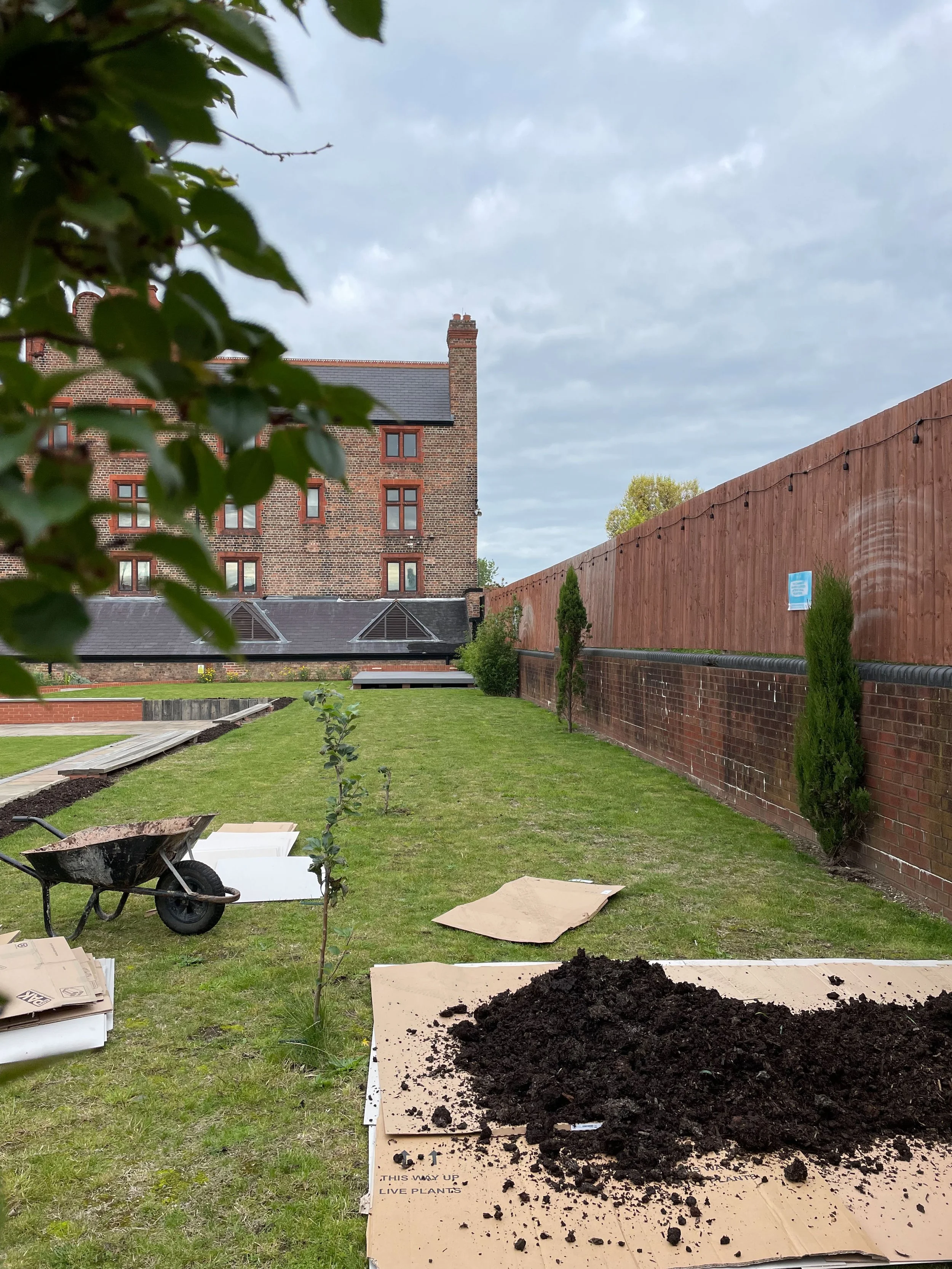
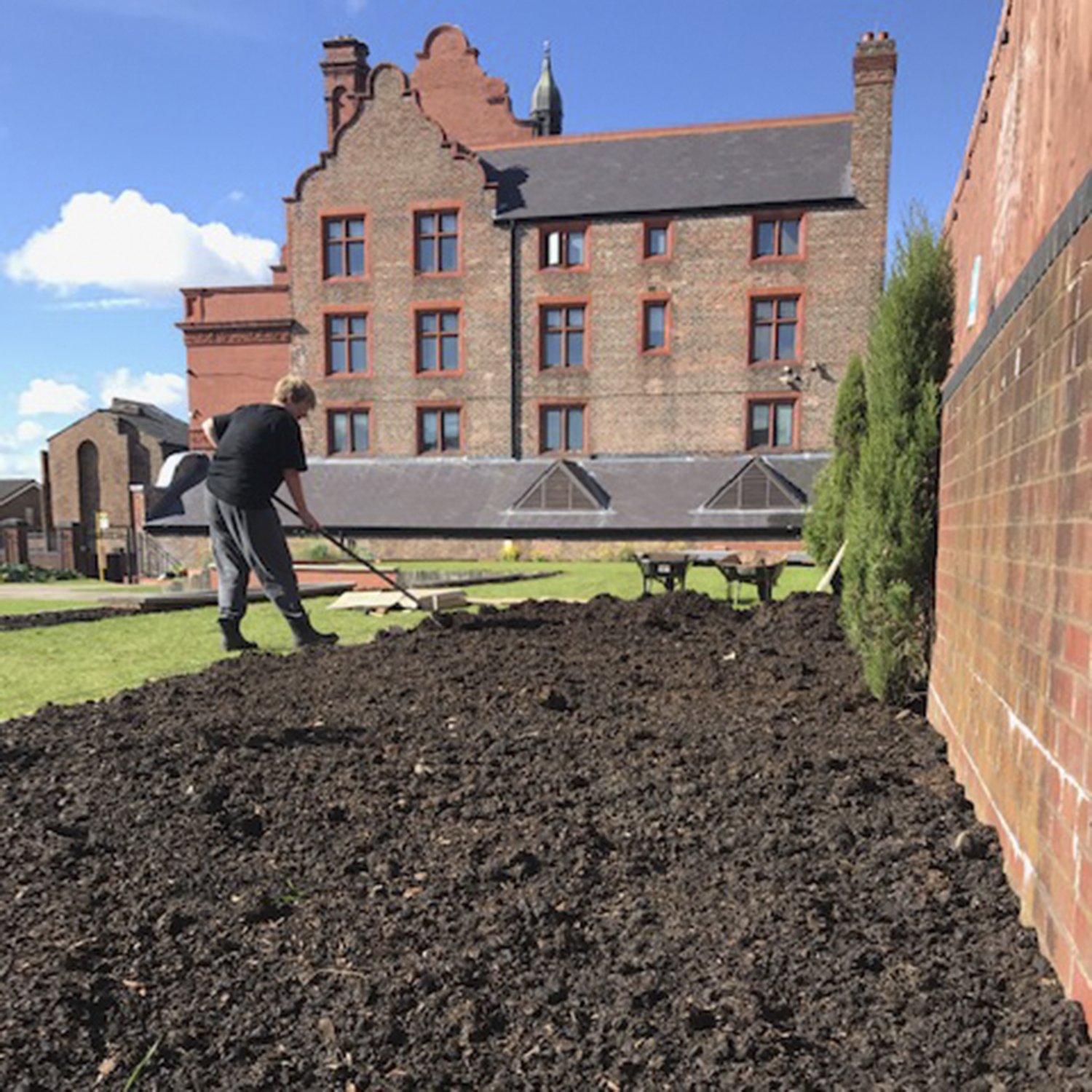
    1. If you are starting from scratch, making no-dig beds couldn’t be easier and it can be done over existing lawns or weedy soils. Add 1-2 layers of thick cardboard (no tape or staples) to your plot overlapping the edges so there are no gaps. Add 5-15cm of compost on top of the cardboard to make your growing bed.

    2. Your cardboard layer will starve lawn and weeds of light, killing them naturally without disturbing the soil structure beneath.

    3. You can use wooden batons to provide a temporary edge to your beds but long-term they are best avoided as rotting wood attracts slugs and woodlice (which we don’t often want near our crops).

    4. Creating paths between your beds can also be done using no-dig. Lay a layer of cardboard and mulch paths with wood chip – not only is this usually free, it is organic and will help to build the vital mycelium networks within your soil.

    5. If the compost on your new beds is soft and even, you can sow or plant straightaway. Otherwise it works well to make beds a month before starting to sow or plant, so that a little weathering can happen and perhaps a first flush of weeds can be hoed off or hand weeded.

    6. Compost! Ideally make your own – we have a great composting guide here. There is nothing more satisfying than turning kitchen and garden waste into “black gold” and a constant supply is essential for no-dig and building soil health. Compost keeps the soil alive and healthy, as well as adding essential nutrients. All the soil fauna and fungi that are not damaged by digging can become more abundant and help plants to grow more healthily.

    7. Each year in late Autumn or Winter add a 2.5cm layer of compost to your beds in preparation for the next growing season. This can be added around any plants that you might still have in the ground.

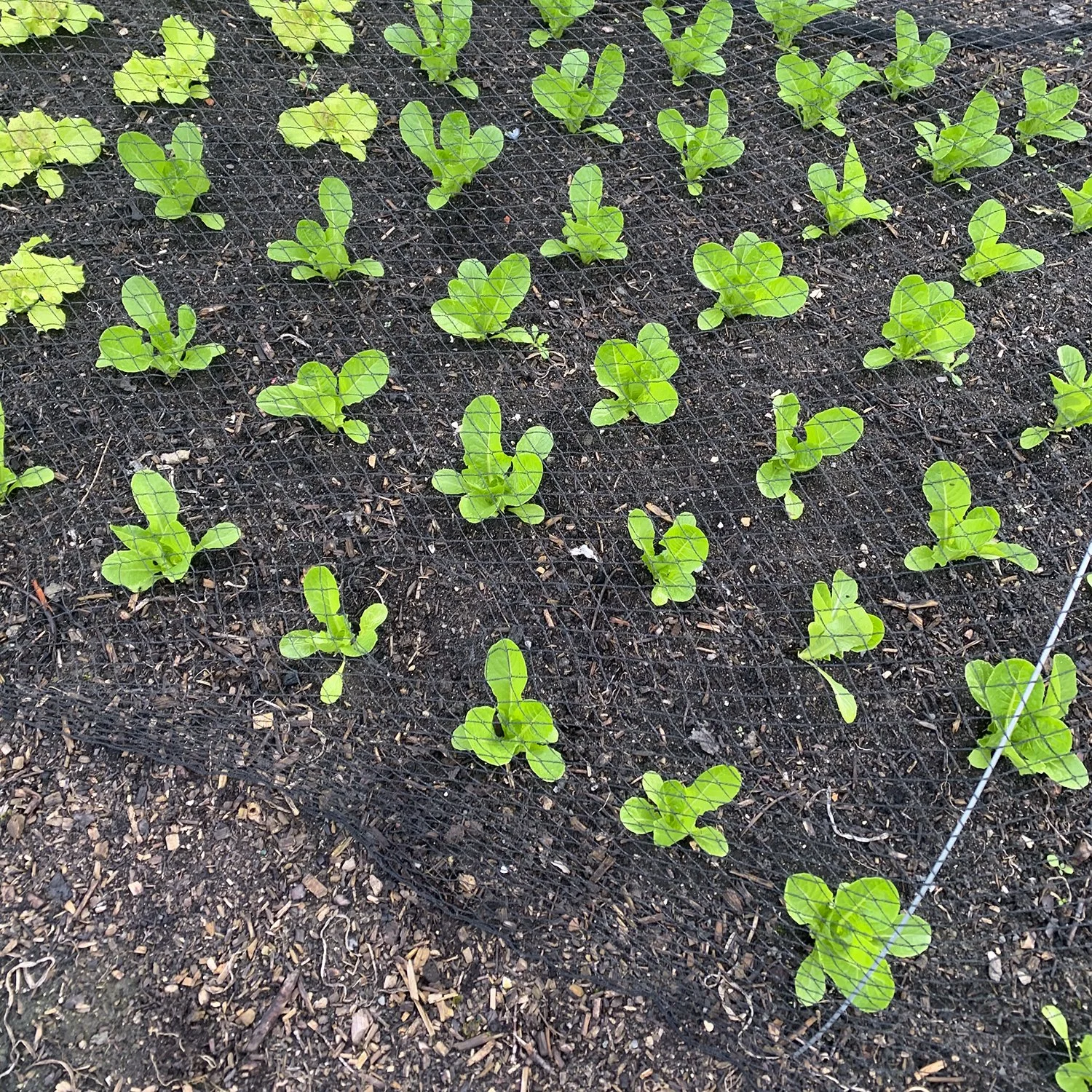
    8. When sowing crops, disturb your soil as little as possible. Create small drills for sowing direct or use a dibber to plant bulbs or plug plants.

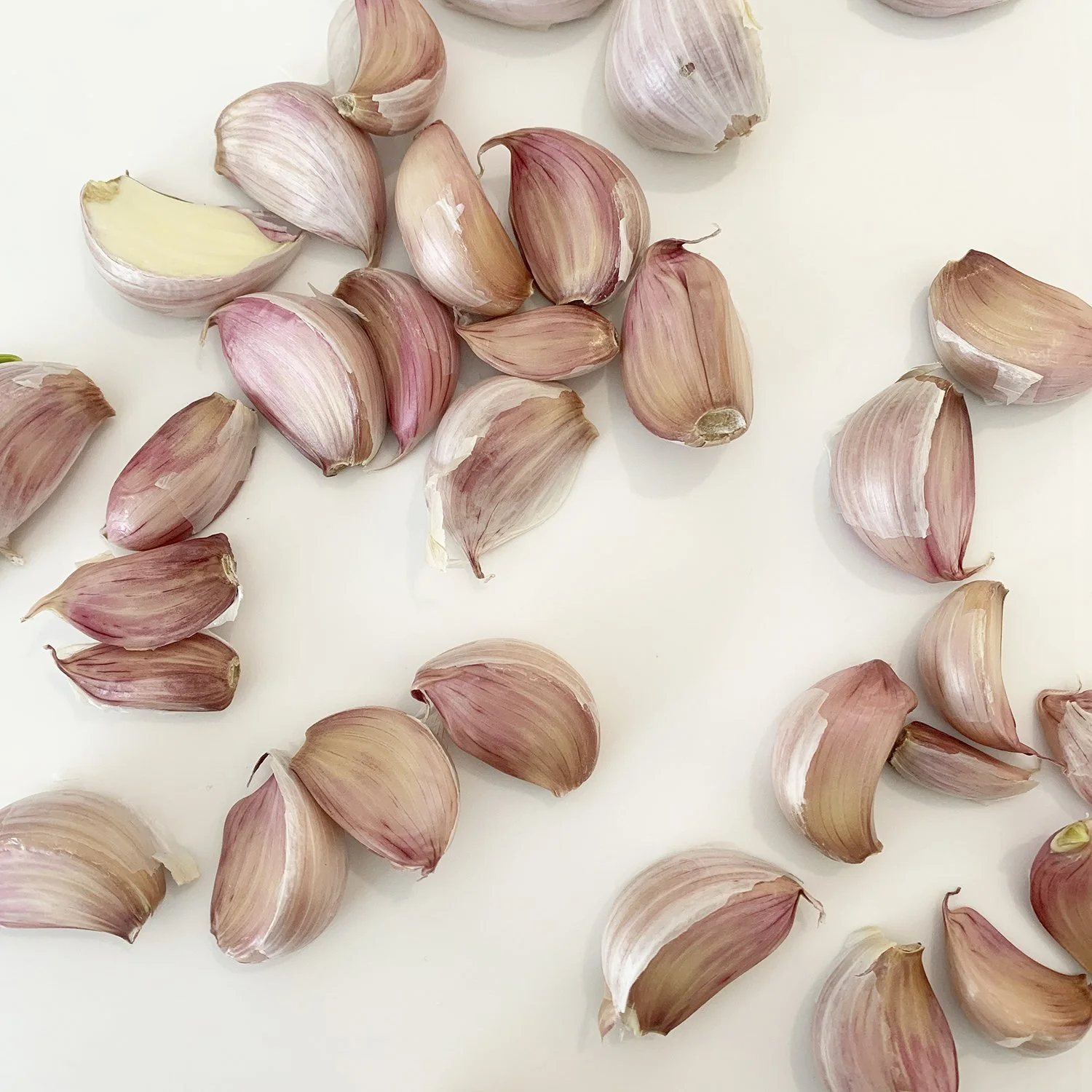
    9. When harvesting you can cut the plant at ground level and leave the roots in the ground to rot. This continues to feed the soil without disturbing its structure. If harvesting crops like onions or garlic, pull gently and push any disturbed soil back into place.

    10. There are lots of amazing resources out there to explore but if you want one go-to recommendation check out Charles Dowding. He has an amazing YouTube channel, a number of books and also runs inspiring courses at his Somerset market garden.

  • Seed Saving

    Seed Saving

    Saving seed keeps varieties alive, customises seeds to thrive in the local environment, connects growers and saves money! We asked Jackie Swanson, lead horticulturalist at Squash, to share her knowledge and top tips to get you started.

    Squash Liverpool established The Toxteth Seed Library in 2013 and have been saving seed on Windsor Street L8 since then, mainly saving seed from the Grapes Community Food Garden, The Seed Library Garden and the Squash Café Garden.  

    Each year we hold a Seed Share in February and a Seed Save in September, where we invite local growers to swap / share their seed and help us to clean, pack and stock the library. To find out more about upcoming Seed Saving events please visit www.squashliverpool.co.uk

    It is illegal sell seed without having a licence and registering the seed with the Government Animal and Plant Health Agency (APHA). Seed Libraries and Exchanges can get round this by sharing, swapping and receiving donations for their seeds.

     Seed saving tips ….

    1. There is a real science to saving seed and it is important to understand which plants can cross pollinate, so it is advisable to stick to Heirloom, Open Pollinated and Organic varieties to save seed from.  F1 Hybrids are plants that have been cross pollinated / bred for disease resistance, vigour, shape etc.  If you save seed from a F1 plant and grow it to save seeds from, the new generation will not come true, it will resemble one of its parents.

    2. Choose strong plants, treat them well and let air circulate around them.

    3. If you are in a shared space, it is advisable to let others know which plants you are planning to save seeds from.

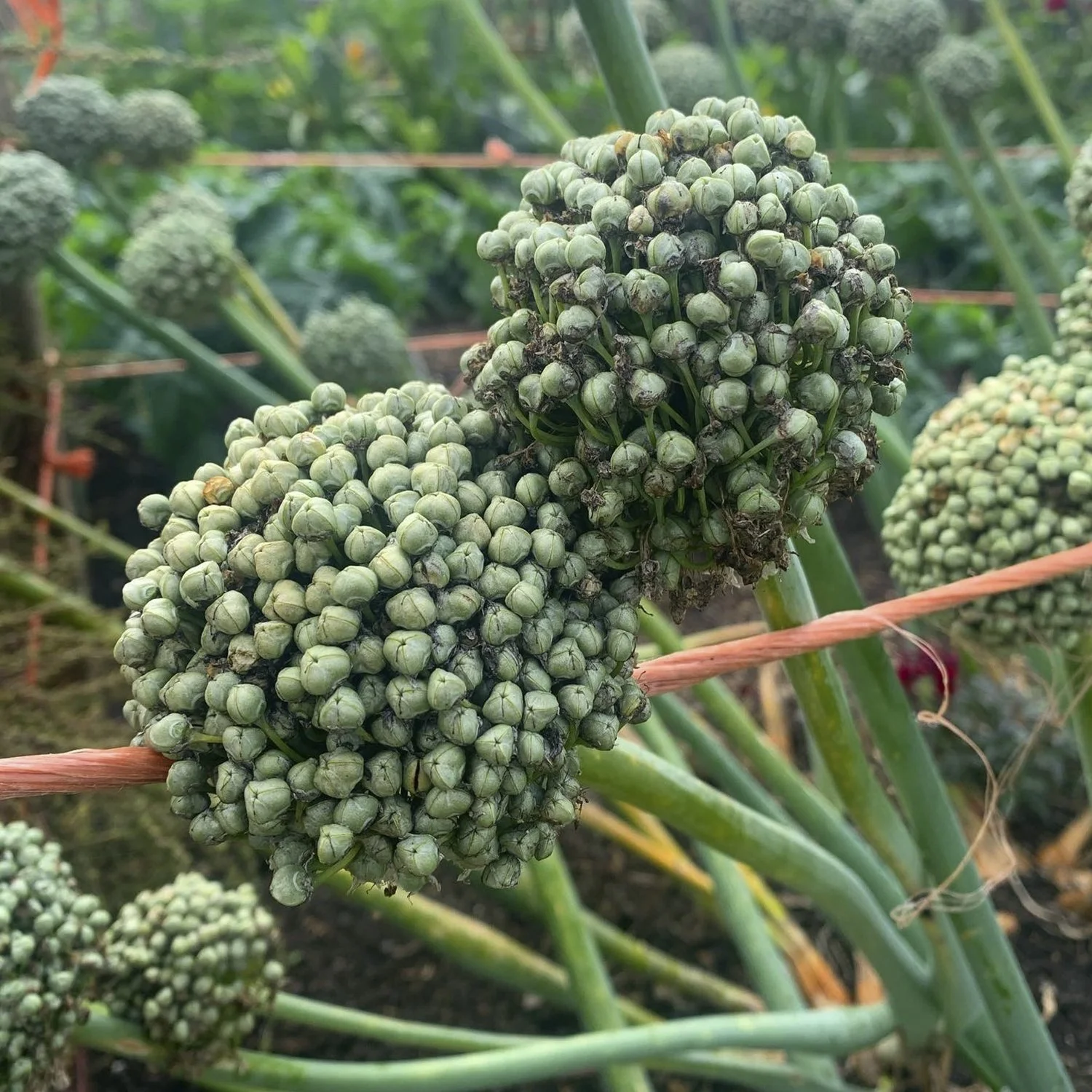
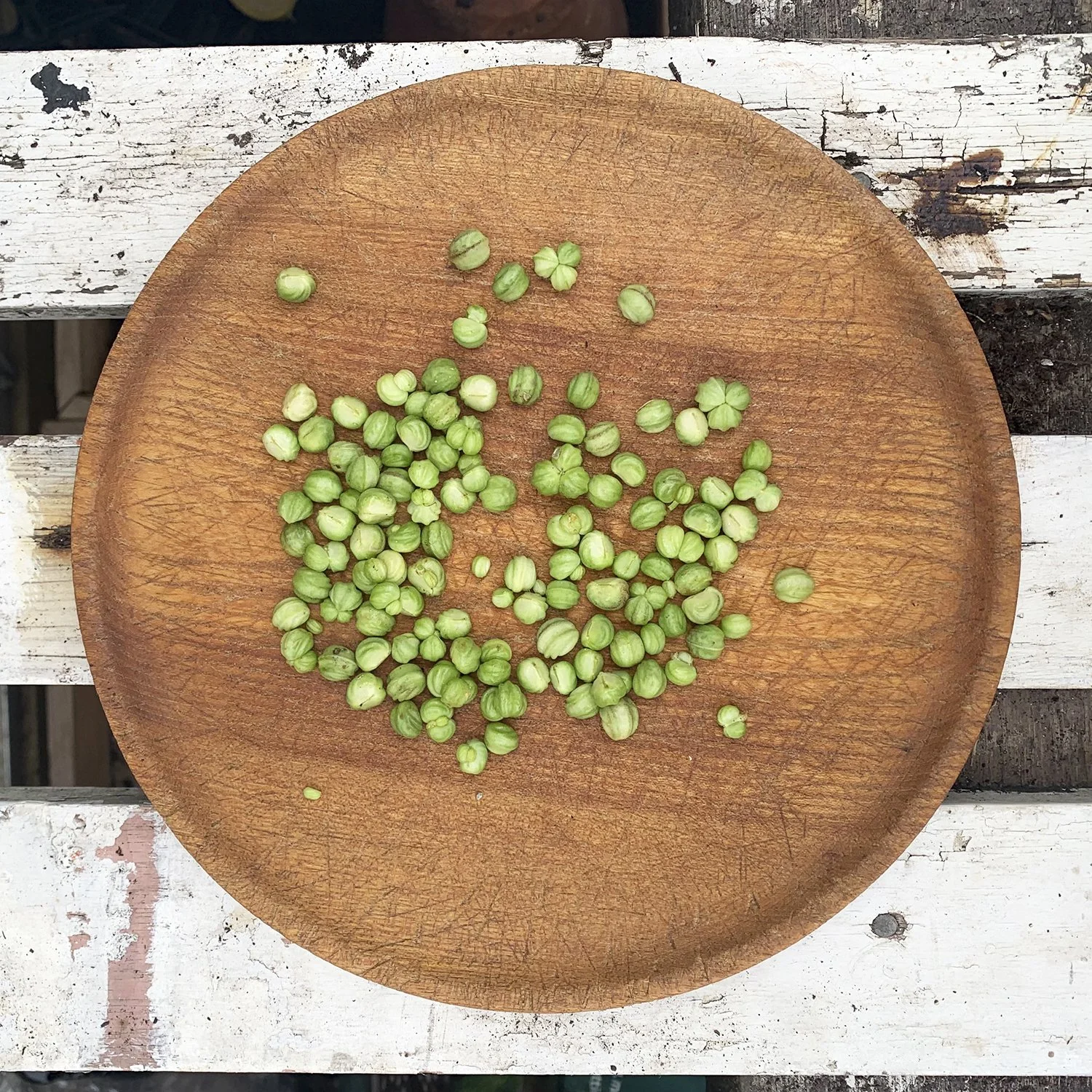
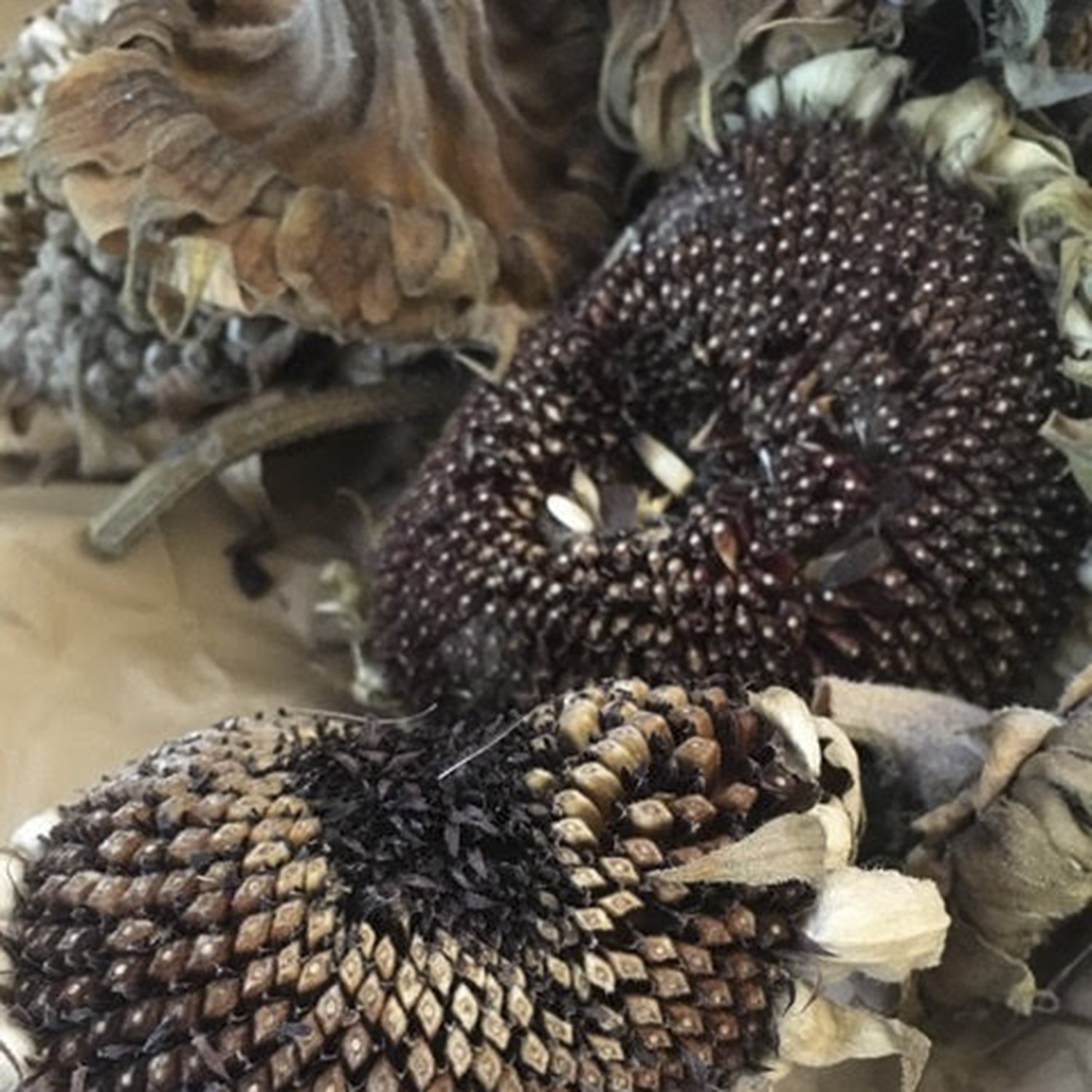
    4. Collect seed when it has not rained for a few days and the plants are dry. Allow the seed heads to ripen naturally on the plant. When fully formed and dry, cut the branch or the individual seed heads into a paper bag. Allow the other seeds to mature on the plant until ready.

    5. If the plant has fine seeds with a majority that are ripe and dry but some still need maturing, you can pull up the whole plant or cut at the main stem, hang it upside down in an airy dry space and place a large paper bag over the seed heads to catch them as they naturally dry.

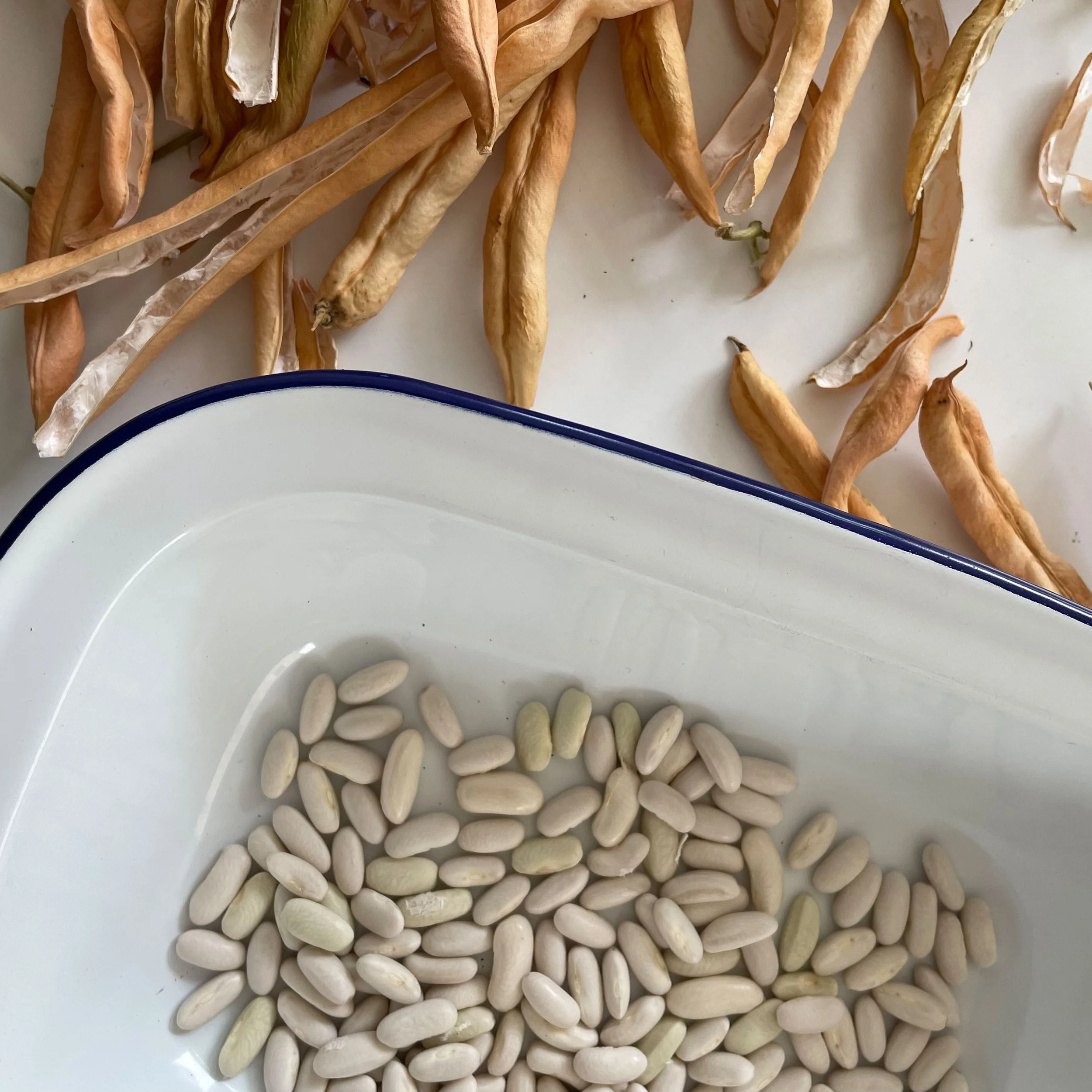
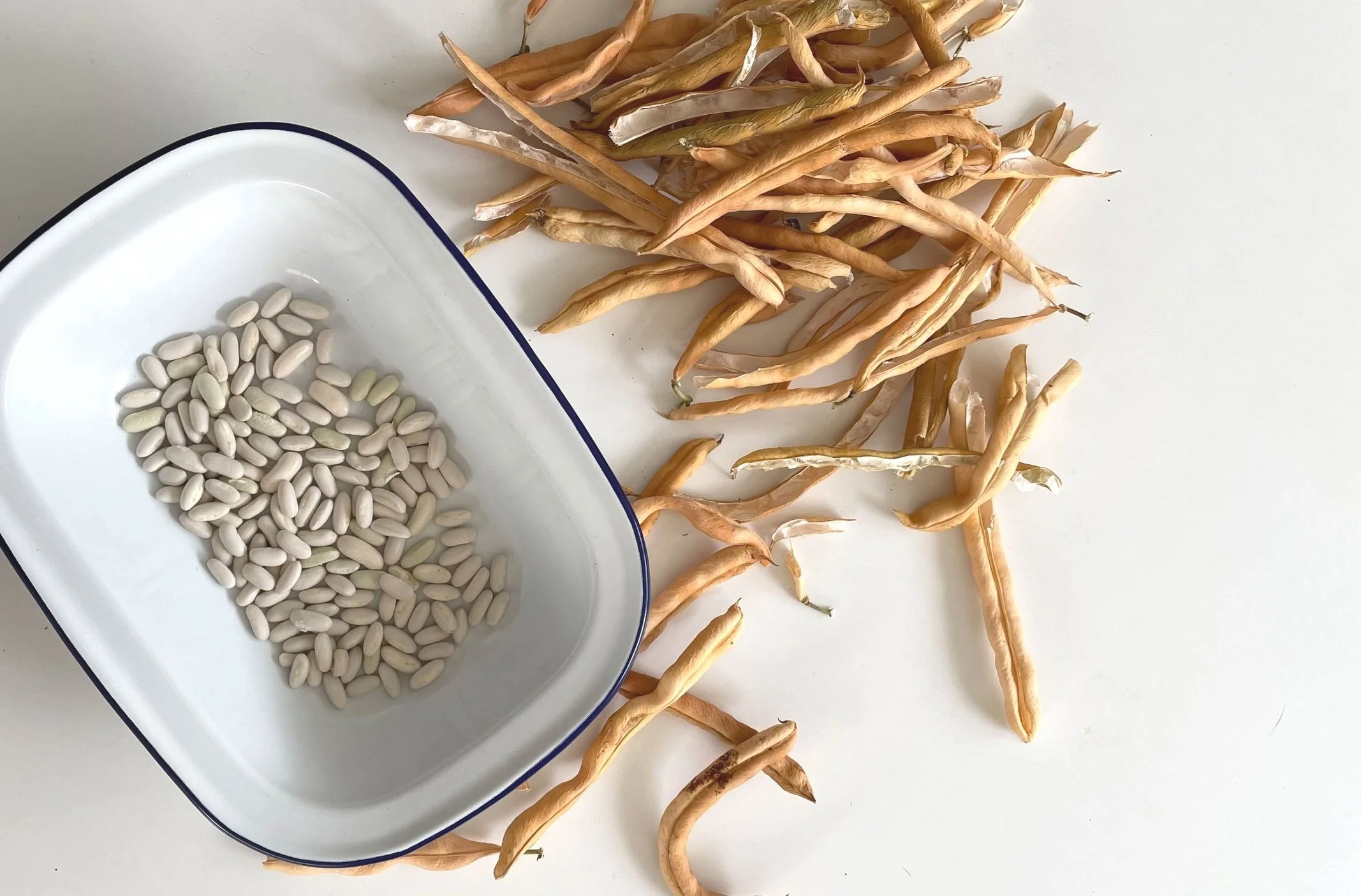
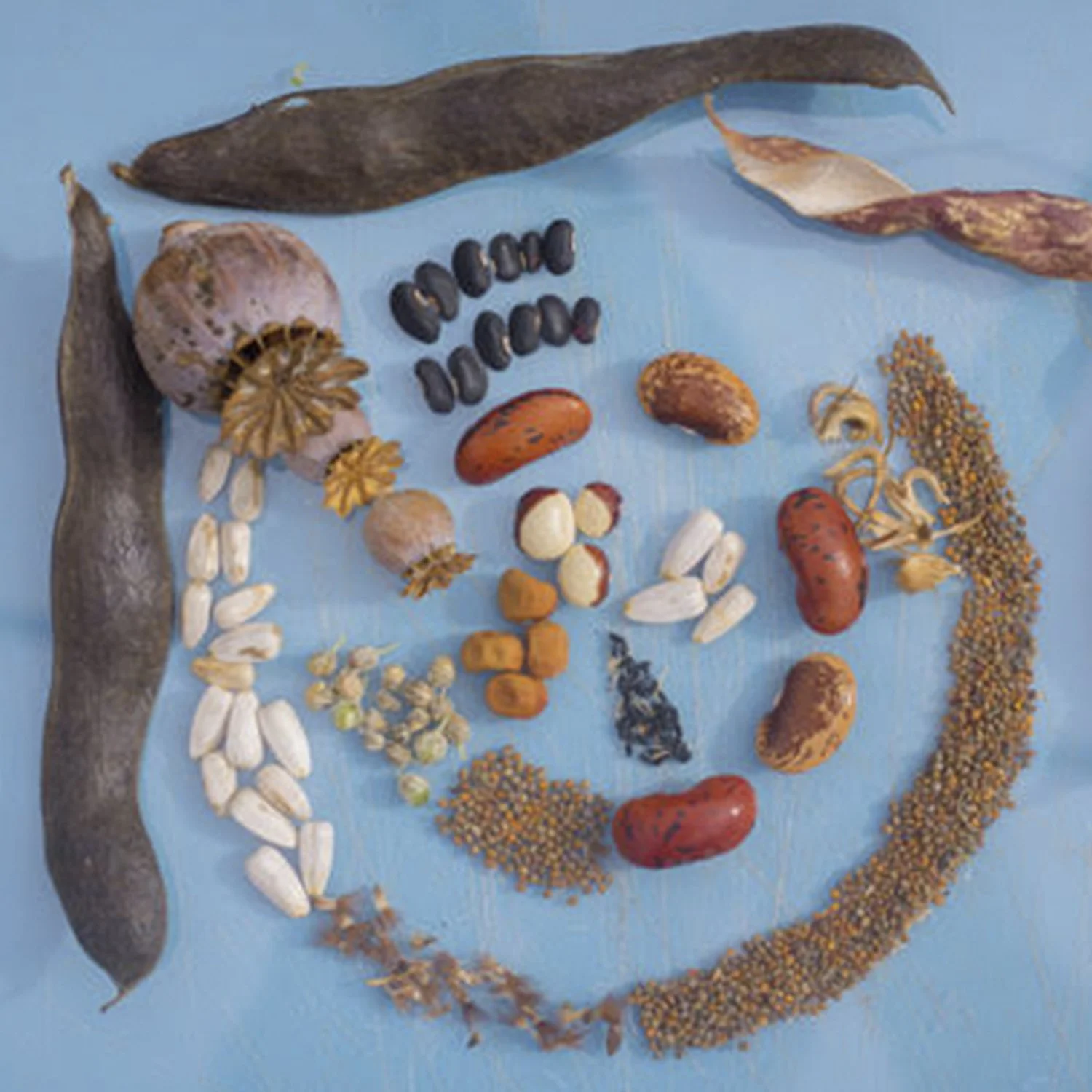
    6. Peas and beans are best left to mature and dry on the plant. Collect and then shell from their pods and store.

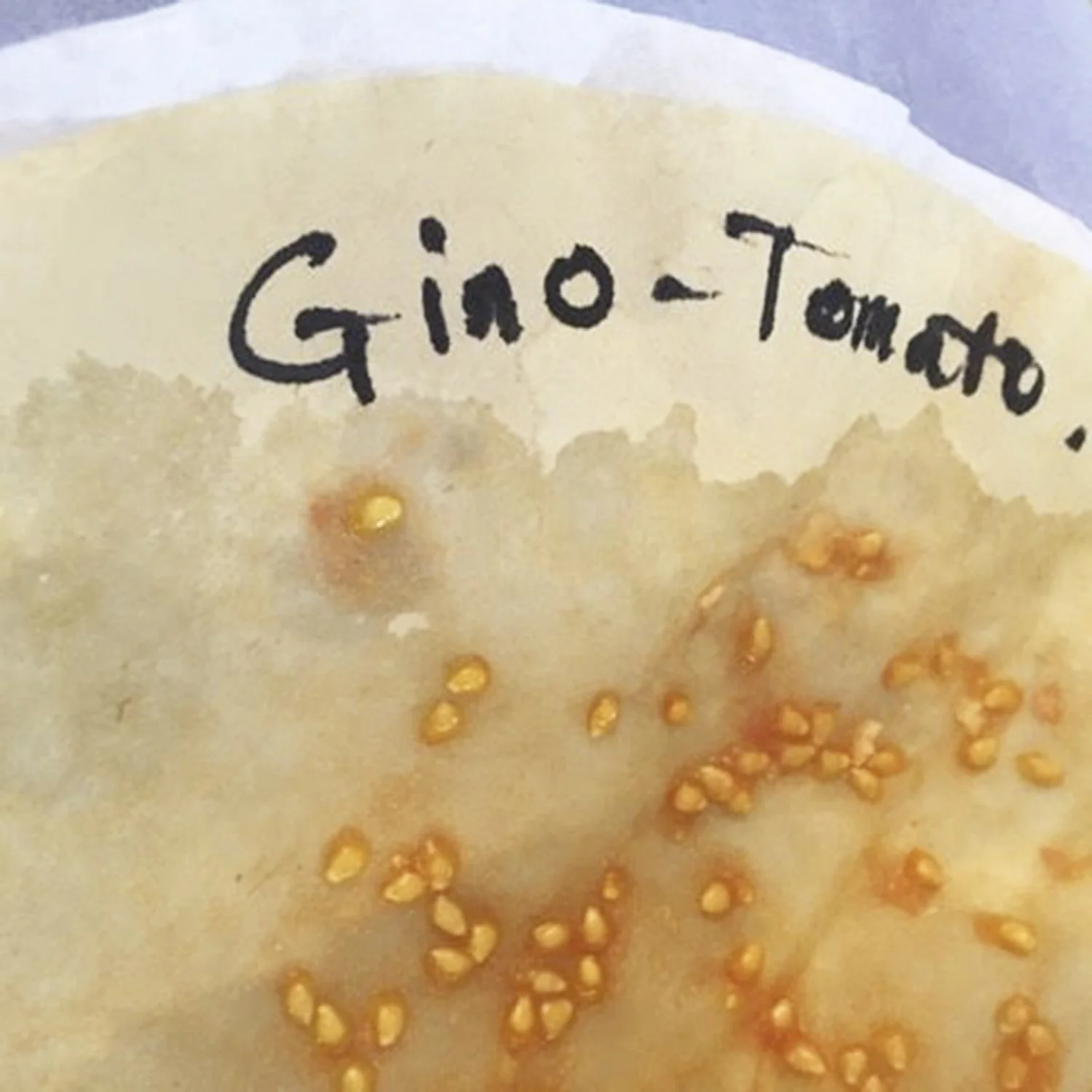
    7. Tomato seeds can be squished on to coffee filters and peeled off when dry

    8. When totally dry the seeds need to be cleaned from their stems, pods and husks. Watch out for insects and mould. Always choose the largest healthiest looking seeds. Very small seeds can be sieved using various sizes of mesh, and very fine chaff can be blown away from the heavier seed. Manually pick out larger seed and save the reject seeds for the birds.

    9. Once cleaned store the seeds in a clean airtight container and label them by name and date (it is really easy to get seeds mixed up!). Store the containers in a cool, dry, dark place. When you are ready, pack your seeds in envelopes or seed packets and label correctly.

    10. Seeds are most fertile when fresh, the percentage of germination reduces over time.  However, some varieties of seeds can stay viable for years.  If in doubt do a germination test by placing the seeds on a moist tissue in a plastic bag, store in a warm dark place and check for germination.   


    Happy Saving and Sharing!